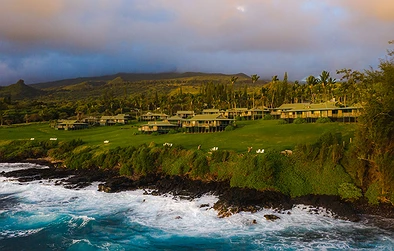

You can fly across most of Western Australia and see barely a soul below – just red earth, then blue water, then more red earth. Sal Salis sits right where those two extremes collide: a scattering of safari tents dropped between a national park full of gorges and kangaroos, and a coral reef so close you can wade to it.
There's no pool, no spa, no phone signal, and that's rather the point. This is a camp that runs almost entirely on solar power and rainwater limits, and yet somehow still finds room for a three-course dinner and an honesty bar every night.
Location

Sal Salis sits on the North West Cape, inside Cape Range National Park, about 66 kilometers (41 miles) – roughly a 48-minute drive – from the town of Exmouth. It's the only accommodation actually located within the national park, and the closest to Ningaloo Reef, with the camp positioned just 50 meters (164 feet) back from the sand among low coastal dunes. Behind it, about two kilometers (1.2 miles) inland, the limestone range of Cape Range rises up, cut through with gorges.

Most people arrive by flying into Exmouth's Learmonth Airport, from where a road transfer of around 90 minutes each way is included in your stay. If you're driving, the trip from Perth covers about 1,330 kilometers (826 miles) and takes around 13 hours, with a no-driving-after-dark rule inside the park due to the number of animals crossing the road at night.
A Camp Built On Thirty Thousand Years Of History

Sal Salis reopened as a luxury camp in 2016, when the number of tents was expanded, the Lodge extended and the kitchen upgraded. It now operates under a lease with Western Australia's Parks and Wildlife Service, a partnership that funnels five percent of the camp's turnover back into conservation work in Cape Range National Park, on top of standard park entry fees.

The land carries a long human history: archaeologists have found human hair and modified shells here believed to be around 32,000 years old, among more than 100 identified sites across the range. Sal Salis acknowledges the Baiyungu, Yinikurtura and Thalanyji people as the traditional owners and ongoing custodians of the Ningaloo Coast.
The Accommodation

There are 16 tents in total: 15 Wilderness Tents, some of which can be set up as family configurations, and one Honeymoon Tent set apart from the rest. Every tent is raised on a timber platform, connected by boardwalks designed to protect the dunes and stop erosion from foot traffic, with the tent and Lodge colors chosen to blend into the landscape rather than stand out against it.
Wilderness Tents vs the Honeymoon Tent

The 15 Wilderness Tents sit among the dunes, each with a king bed (twin configuration available), an en-suite bathroom, and a private deck with a hammock.
The Honeymoon Tent is positioned further along the beach, away from the main cluster, with its own stretch of private beach access, a double hammock, and a bed enclosed in netting looking straight out toward the water. It's built for couples wanting more distance from other people staying at the camp – anniversaries, honeymoons, or just a quieter few days.

Inside, the tents are deliberately unfussy: comfortable beds built from handcrafted jarrah, dressed in organic cotton linen, with guest robes, native herb soap and organic shampoo in the eco-en-suite bathroom. That bathroom runs on a composting toilet system, and water use is capped at 20 liters (5.3 gallons) per person per day, in line with the park's license conditions.

There's no air conditioning – the tents are angled to catch the coastal breeze instead – and no power points inside beyond a light and a USB charger, so cameras and laptops get charged back at the Lodge. Solar lanterns line the paths after dark, doubling as both lighting and a nod to the camp's low-impact approach.
The Dark Sky

Because Cape Range National Park keeps artificial light to a minimum, the night sky at Sal Salis is properly dark – something most visitors from cities or suburbs have rarely, if ever, experienced.
Dinner is served under an uninterrupted view of the Milky Way, and staff can talk you through what you're looking at if you stick around the deck after the plates are cleared. It's part of why UNESCO has started pushing to recognize dark night skies as a form of heritage worth protecting in their own right, and Cape Range is one of the places making that case.
The Lodge

The Lodge, raised above the sand with views over the reef and the Indian Ocean, is where camp life actually happens – meals, sundowners, board games, a self-serve bar stocked with Western Australian beer, wine and spirits.

Breakfast and lunch run more casually, but dinner is the main event: a three-course meal built around local and West Australian produce, often featuring the day's fresh seafood, paired with regional wines and served by candlelight. Before dinner, canapés and drinks are served on the deck as guides run through the following day's activity options, based on that day's conditions.
Activities

Twice a day, guides run small-group activities that alternate between the national park and the reef – typically a walk or gorge hike in the morning and a snorkel or kayak session in the afternoon, adjusted daily depending on weather and tides.
You don't need to book ahead; you just put your name down on the board in the Lodge the evening before. Outside of the guided sessions, the reef and its equipment are available to explore independently, whenever you like.
Paddleboards and Kayaks

Kayaks and paddleboards are available at camp for exploring the coastline at your own pace, with life vests included. Guides check tide and wind conditions before recommending when to head out, and it's worth timing a session around sunset if you can, when the water tends to be calmer.
Guided kayak-snorkel trips also go a little further offshore, dropping anchor over deeper lagoons where you're more likely to spot soft corals, sponges and wobbegong sharks. Between August and October, there's a reasonable chance of paddling close enough to see a humpback whale from the water.
Snorkeling

Because Ningaloo is a fringing reef, you don't need a boat to reach it – you walk off the beach and you're in it within a few strokes. The reef here is home to more than 500 species of fish and 250 types of coral, along with rays, turtles, dugongs and reef sharks.
All snorkeling gear and wetsuits are provided in a range of sizes, and guides run off-site trips to spots including Turquoise Bay, regularly ranked among the best beaches in Australia, as well as Lakeside and Osprey Bay.
Humpback Whales

Roughly 30,000 humpback whales migrate past Ningaloo Reef each year on their way to breeding grounds further north, and in-water swims with them run from July through the end of October. It's an optional, additional booking, not included in the standard stay, and spots tend to sell out months ahead given the demand.
The day starts with a transfer to Tantabiddi Boat Ramp, about 25 minutes from camp, followed by a boat trip out to find the whales, with a spotter plane assisting from above. Swimming confidence matters here, since you're in open ocean with currents and swells rather than a sheltered lagoon.
Whale Sharks

Whale sharks pass through Ningaloo waters from mid-March through the end of August, and Sal Salis can arrange swims as another optional, separately booked experience. These filter feeders can grow up to 12 meters (39 feet) long, and researchers have identified more than 235 individual whale sharks in the area, some tracked returning to Ningaloo for at least 29 years running.
As with the humpback swims, the day involves a transfer to Tantabiddi Boat Ramp, an initial snorkel to get comfortable in the water, then time in small groups swimming alongside the sharks once one is spotted, with a photographer on hand and lunch served on board between swims.
Yardie Creek Rd, Cape Range National Park WA 6707, Australia